Inspire state action
Move the people who hold the budgets.
Most school broadband money and mandates sit at the state level. ESH worked with governors and state leaders to put new federal E-rate funding to work on faster connectivity.
Case study · Education SuperHighway
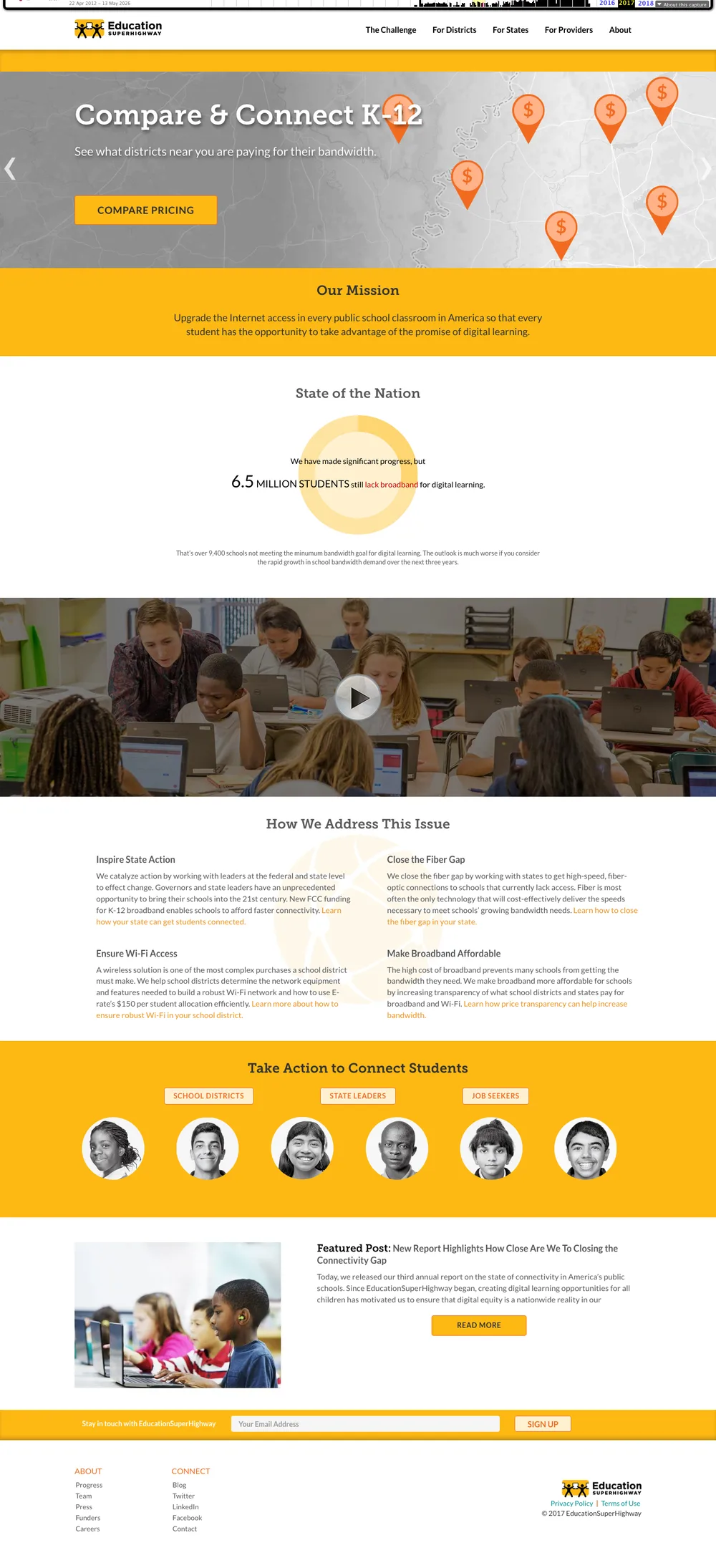
EducationSuperHighway set out to bring high-speed internet to every K-12 public school in the country. We provided the web development, custom programming, maintenance, optimization, and hosting behind that work.
The client
EducationSuperHighway is a national nonprofit backed by funders including the Gates Foundation and the Chan Zuckerberg Initiative. Its first mission was to upgrade internet access in U.S. public schools, and it worked: by 2019 the classroom connectivity gap was closed, reaching 47 million students.
The organization has since taken on new missions, from home broadband affordability to K-12 literacy. Our work was with them during the school-connectivity years.
The mission, in one chart
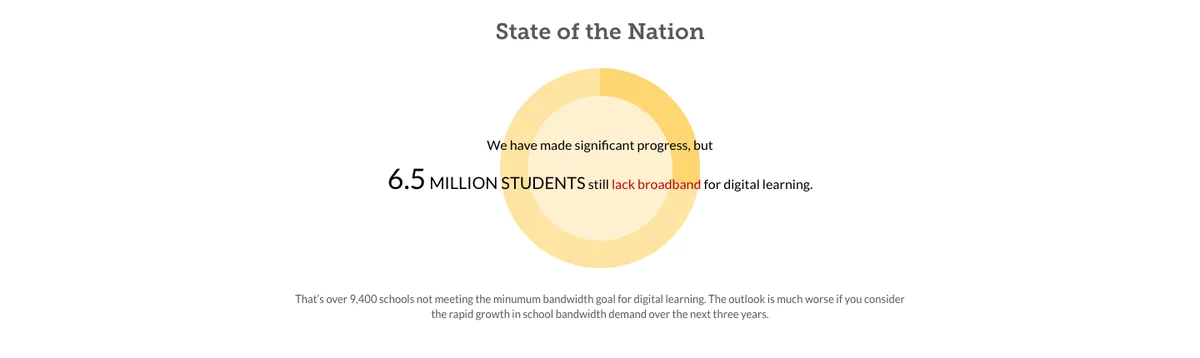
In 2013 only 30% of school districts had internet fast enough for digital learning. Six years later the gap was closed. Watch it close, year by year.
The gap, closing
99% of U.S. school districts met the connectivity bar, up from 30% in 2013.
none students still waiting
The gap closed. 47 million students connected to high-speed internet.
The strategy
Connectivity was never one problem. ESH pulled four levers at once, and the site we built had to make all four clear to districts, states, and funders.
Move the people who hold the budgets.
Most school broadband money and mandates sit at the state level. ESH worked with governors and state leaders to put new federal E-rate funding to work on faster connectivity.
Get fiber to the schools still without it.
Fiber is usually the only way to deliver the speed a school needs at a price it can afford. ESH worked state by state to reach the schools that still lacked it.
Turn bandwidth into working classroom Wi-Fi.
A wireless network is one of the hardest buys a district makes. ESH helped them pick the right equipment and spend their E-rate dollars well.
Publish the prices so they come down.
The strongest lever on price is knowing what everyone else pays. ESH made district and state broadband pricing public so schools could negotiate down.
Four levers, one outcome: Every classroom connected.
The affordability lever, up close
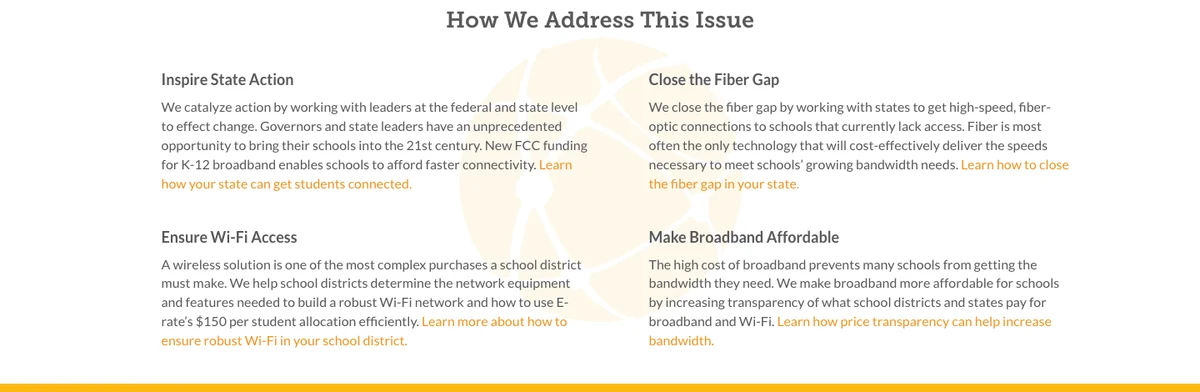
The sharpest tool was transparency. Compare & Connect K-12 put what school districts across the country paid for bandwidth on one map, so any district could see it was overpaying and push back.
Compare & Connect
Put what every district pays for bandwidth on one public map.
A district sees what its neighbors pay, and what it should be paying.
With that leverage, districts negotiate the cost of connectivity down.
The work
A national campaign needs a site that stays up and keeps moving. We handled that end of it: development, hosting, and the ongoing care that let their team focus on the mission.
Then and now
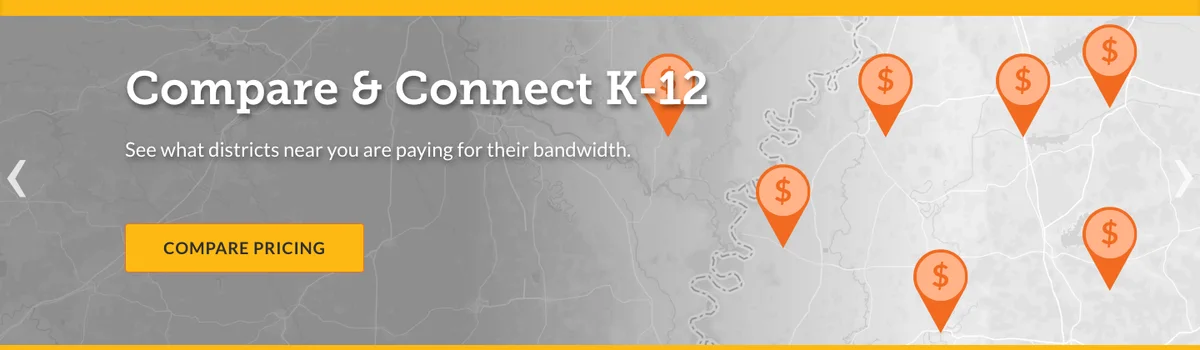
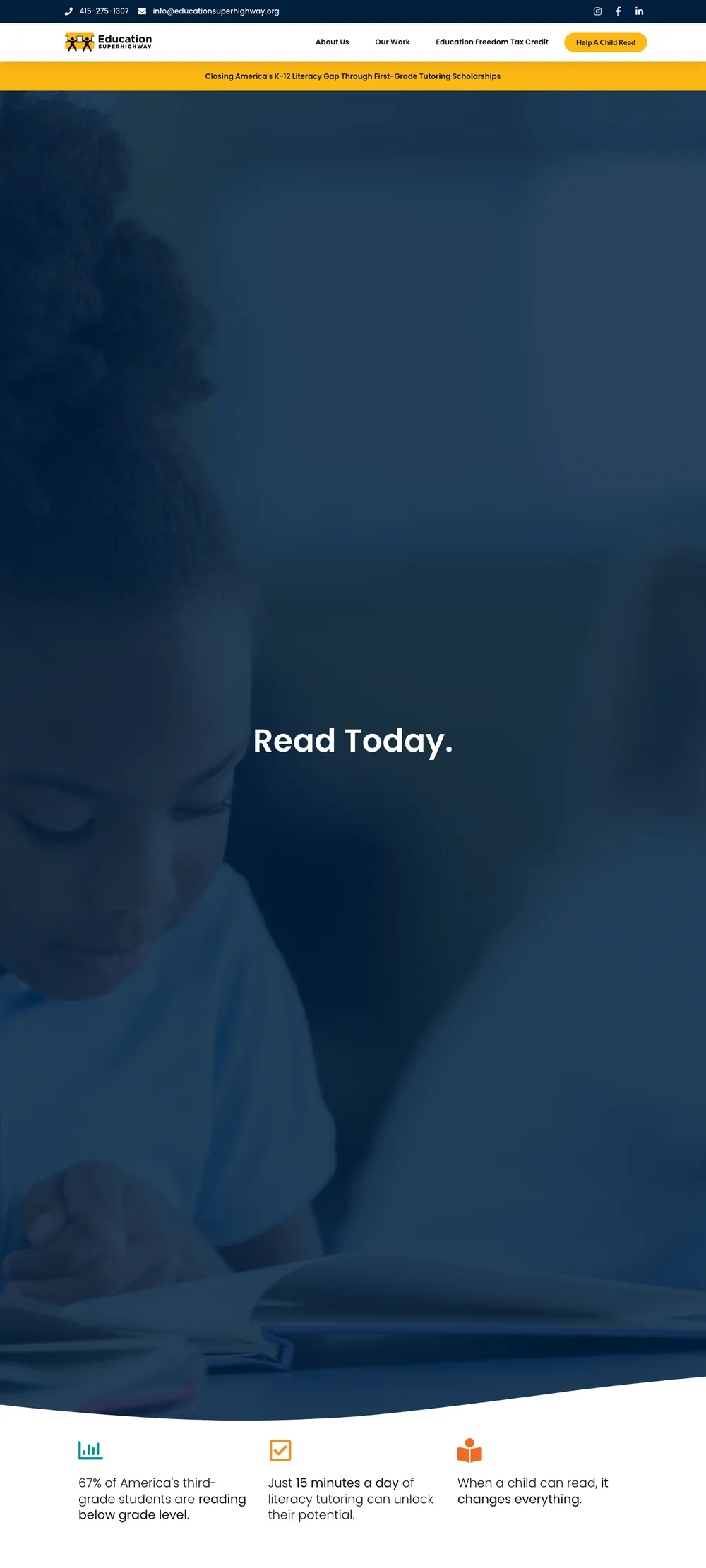
The connectivity gap closed, so the mission changed. The site we ran carried the school-connectivity fight. Today the same organization is on K-12 literacy.
Services on this account
We build, host, and maintain WordPress sites for nonprofits and technology teams, working directly with the people running the work.