Immerse
Step into a real, high-stakes scene in the headset.
Case study · Strivr
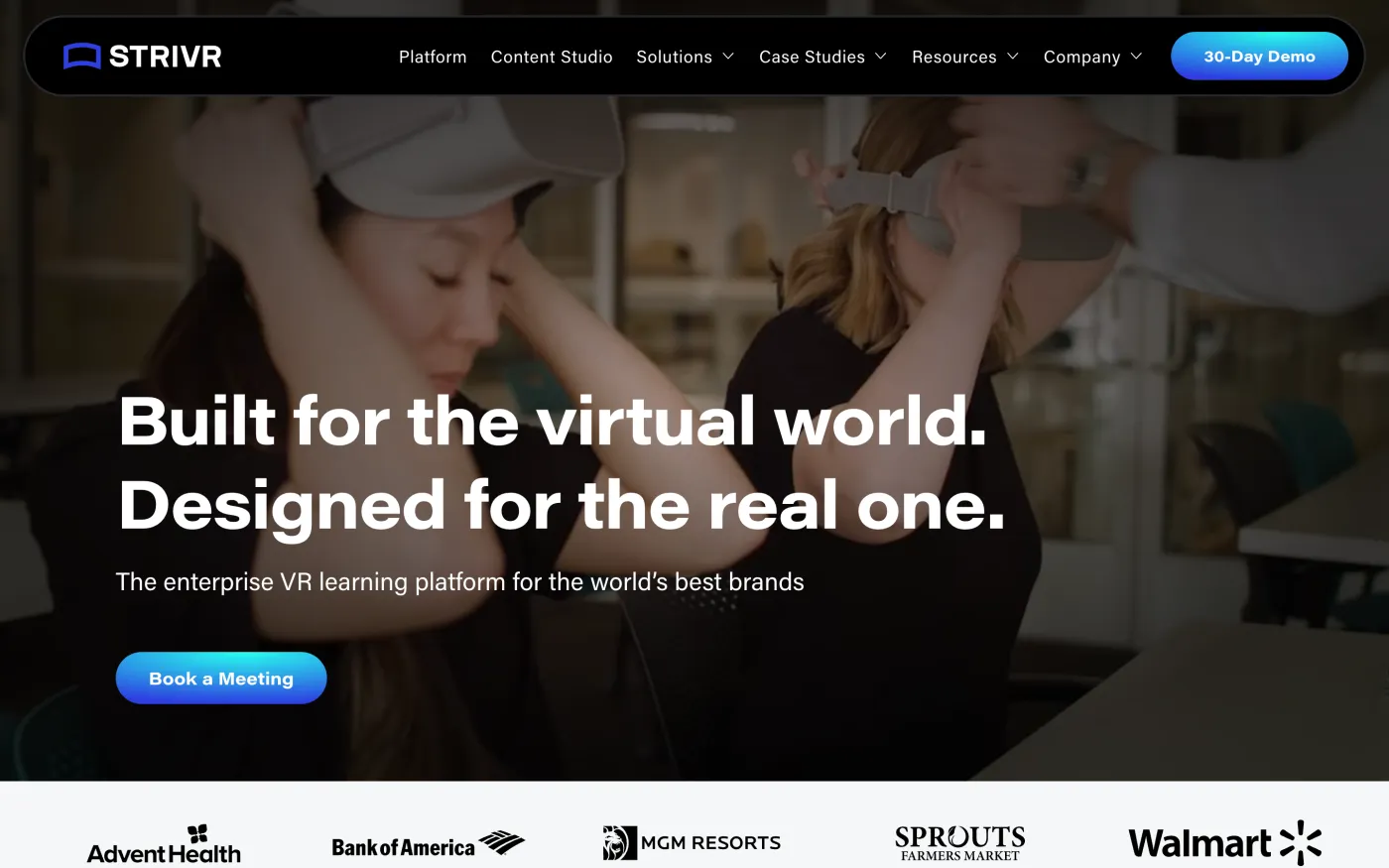
Strivr trains large workforces in virtual reality. From early 2019 to early 2024 we ran the web side: their marketing site, a separate Rise Mag instance, and the integrations behind their lead generation.
The client
Strivr is an enterprise immersive-learning company, born out of Stanford, that trains frontline and corporate workforces in virtual reality. Its platform is used by companies like Walmart and Verizon to simulate real, on-the-job scenarios.
Why it sticks
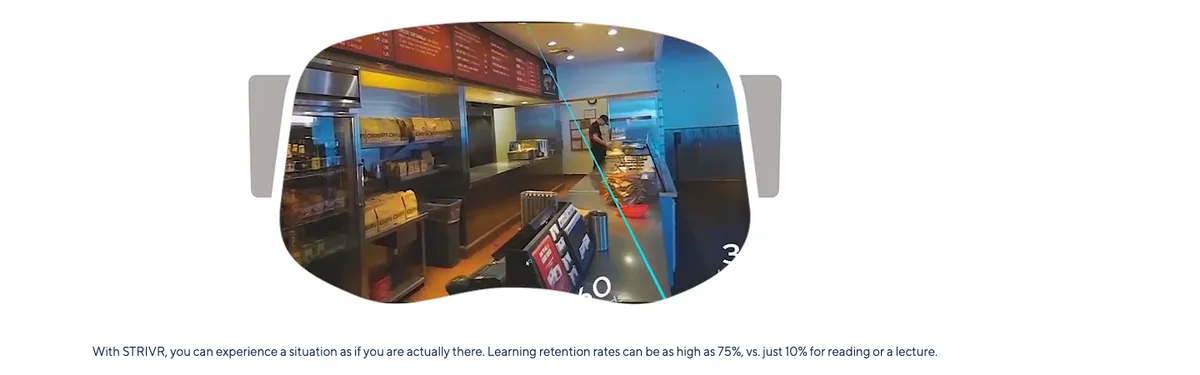
Strivr’s pitch was simple. People forget a lecture. They remember something they lived through. Their own numbers made the case.
Why it sticks
How it works
The method was a loop. Put on the headset, run a real scenario, see how you did, and go again until it stuck.
Step into a real, high-stakes scene in the headset.
Run it again and again, with no real-world risk.
Capture reaction time, decisions, and where attention goes.
Walk onto the floor ready, from the holiday rush to game day.
Framing: Strivr’s immersive-learning method, from a 2018 capture of their site.
The work
Beyond their main marketing site, we built and ran a separate Rise Mag instance for them. The focus across both was custom and back-end development, plus the Pardot form integration that tied the site into their lead generation.
Scroll infographic
The impact page is the most involved thing on the site. It pins an isometric cut-away illustration of an office building and scrubs through eight business outcomes as you scroll: workplace safety, business interruptions, onboarding time, customer service, brand and culture, incident costs, speed to proficiency, and turnover.
Each stop swaps the copy panel, advances the dot rail on the left, and re-points a dotted leader line at a different part of the building, so the number always lands on the scene it describes. The armed-robbery stat points at the figure coming through the door. The airline stat points at the plane. Built on GSAP with ScrollTrigger, pinned and scrubbed, so scroll position drives the timeline rather than a set of one-shot reveals.
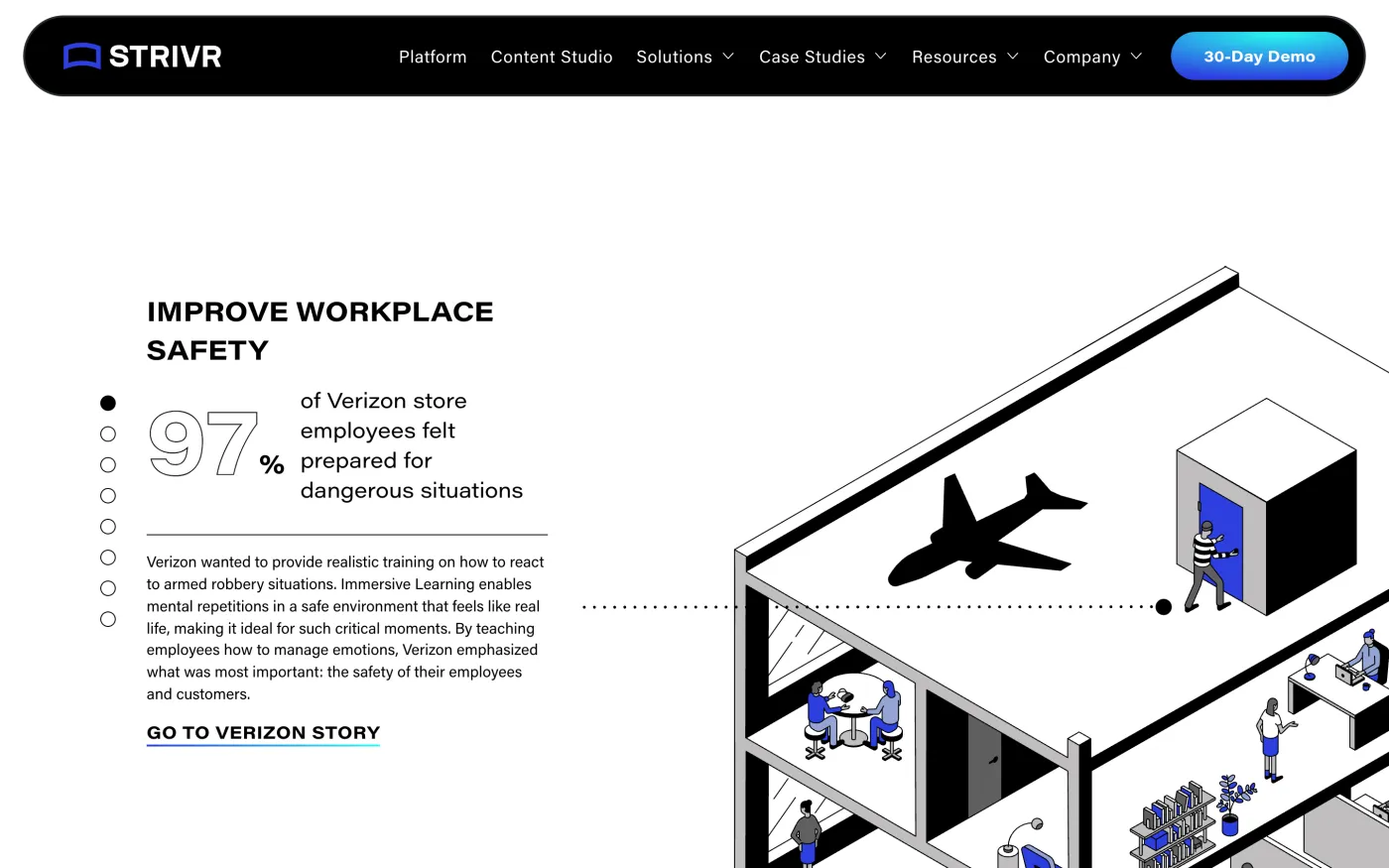
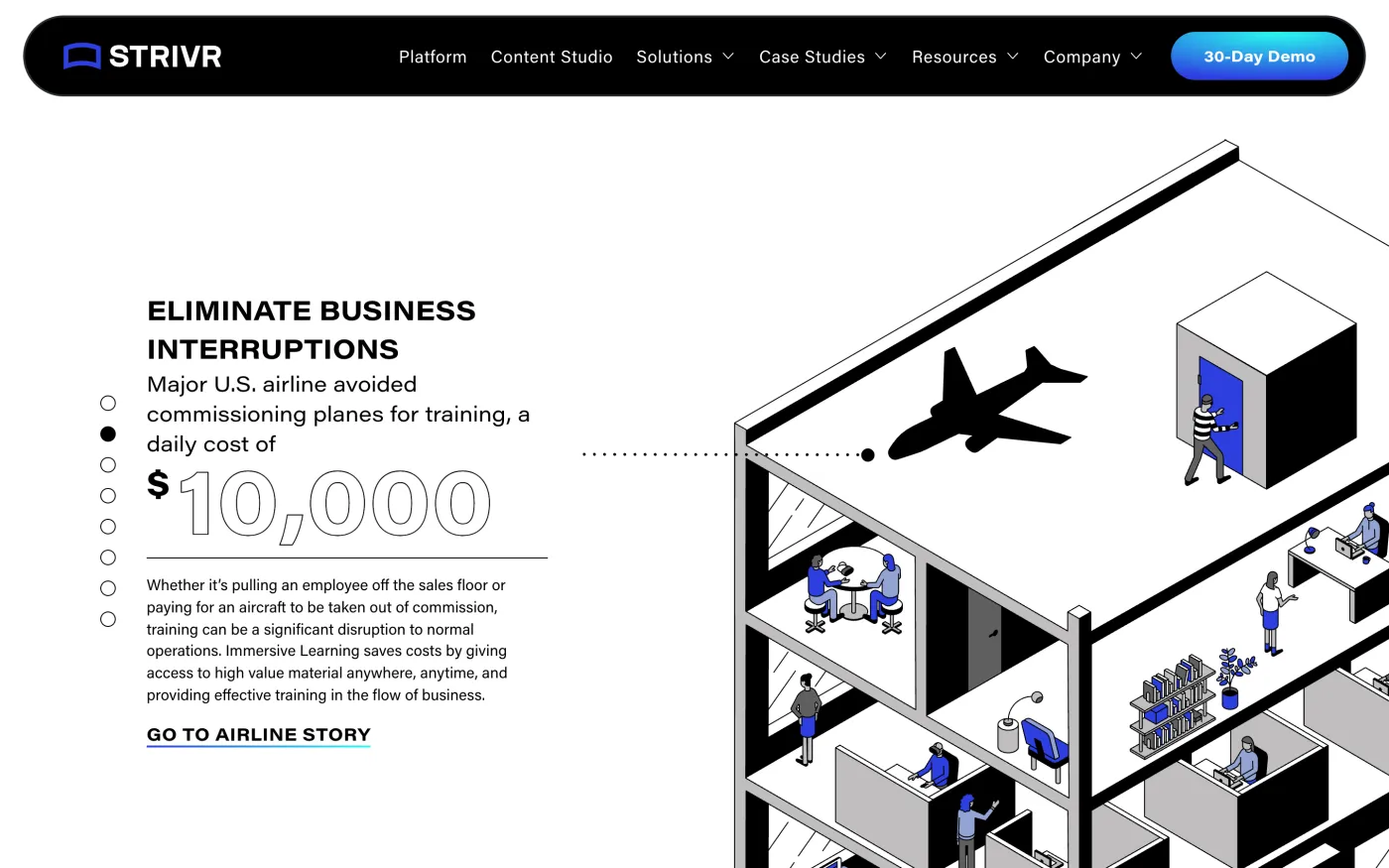
Every panel closes with a link into the matching customer story, so the infographic works as a routing layer into the case studies rather than a dead end.
Assessment tool
The ask came from Strivr's marketing side, and it was refreshingly small. Here is how Charlie put it on the card:
What we discussed will be more of a "readiness tool" - 3 questions to help narrow down which immersive training modules they should explore first.
That is what it is. What industry are you in, why are you evaluating VR, what is your timeline. Answer three and you get the training use cases to look at first. The recommendations are not improvised: they resolve against the use-case matrix their team maintained in a spreadsheet, so marketing owned the logic and we owned the mechanism.
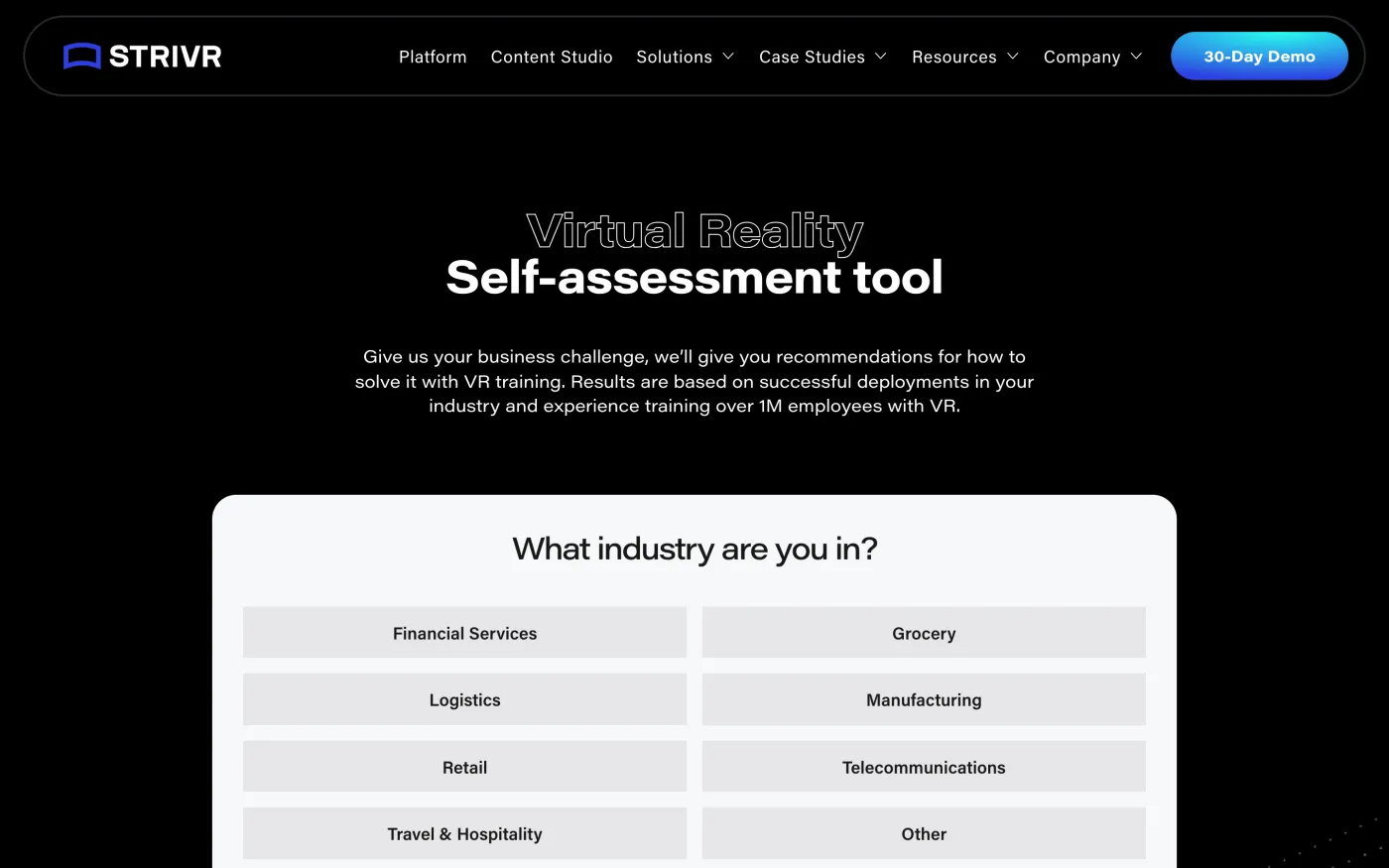
The part that made it useful to sales is that a result is a URL. Each set of recommendations has its own address, which meant the link could be logged against the lead in Pardot and Salesforce and re-sent later. That also made it something we had to maintain: when the site was restructured, we mapped every old results URL to its new one, because the links already sitting in their CRM had to keep resolving.
Rise Mag
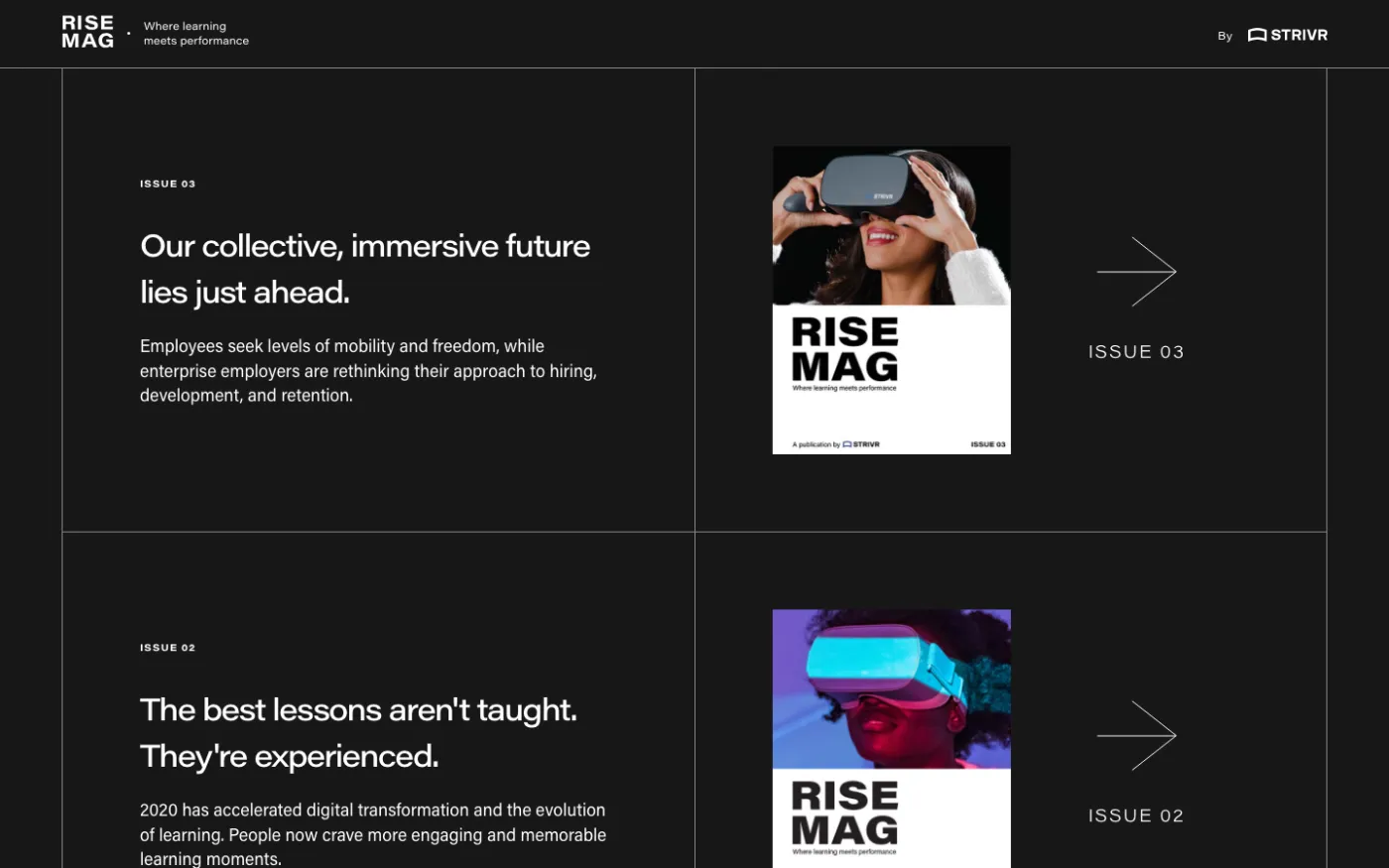
Rise Mag was Strivr's own publication, on its own domain and its own WordPress install, with a custom theme we built for it. Three issues shipped on it: December 2019, December 2020, and January 2022, all of them inside our run on the account.
The structural decision was to build it around issues rather than a feed of posts. An issue
is the container, articles live under it (/issue-02/a-short-history-of-tech-in-the-workplace/),
and the issue index is the front door. That is what lets it read like a magazine, with a
cover, a masthead, and a fixed set of pieces that arrive together, rather than a blog with a
date stamp on it.
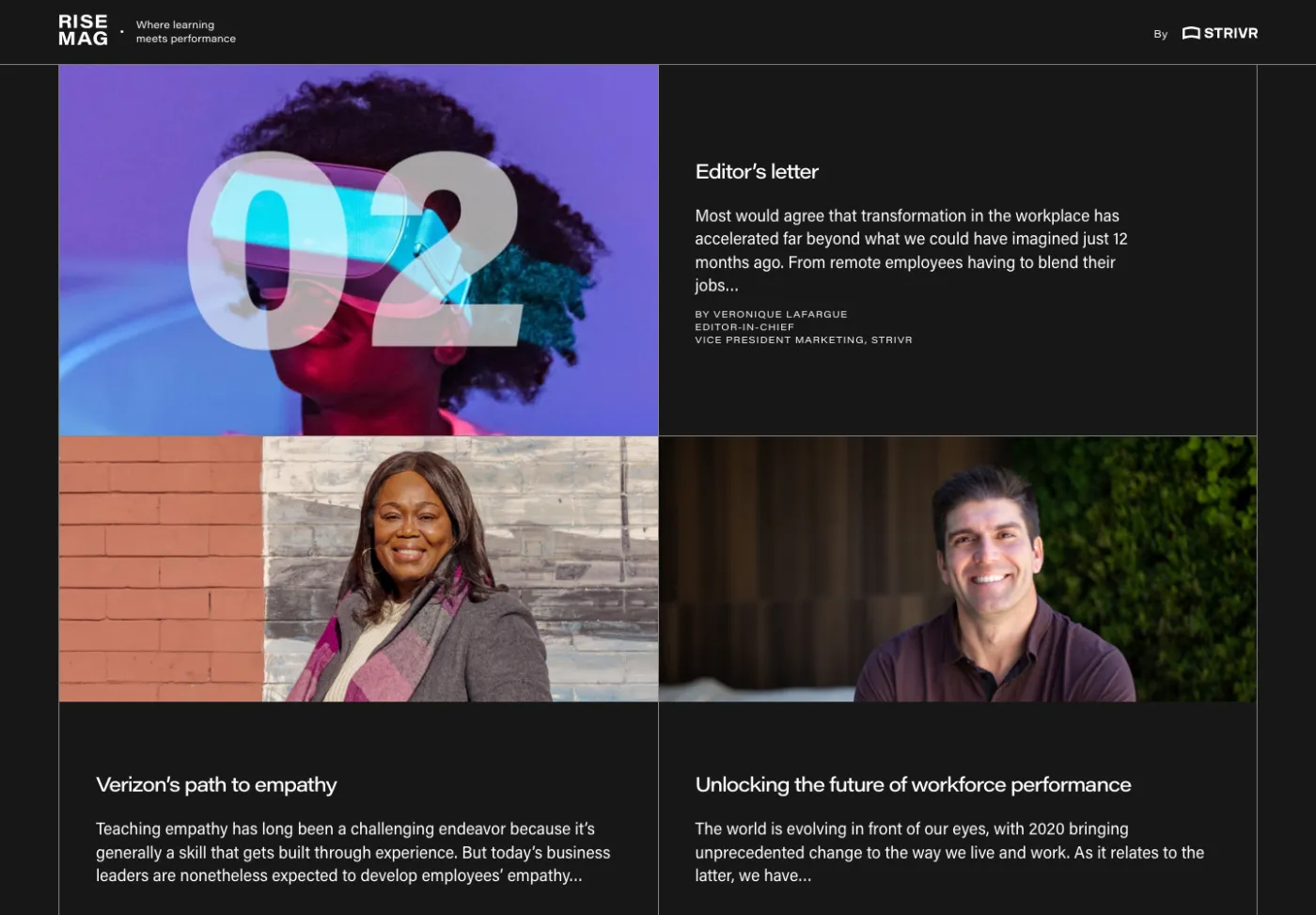
The contributor list is worth noting because it shaped the templates. Alongside Strivr's own people, issues carried Josh Bersin, Jeremy Bailenson from Stanford's Virtual Human Interaction Lab, and an investor perspective from Georgian. Outside bylines with titles and photos meant contributors had to be first-class in the theme, not a line of italics under a headline.
Services on this account
We build and maintain WordPress marketing sites for funded technology and SaaS companies, working directly with marketing and design teams.